







Anyone planning a suspension upgrade will eventually come across the debate between rose joints and OEM rubber bushes. Both serve the same basic purpose within a suspension system, but they do it in very different ways.
For a standard road car, rubber bushes make a lot of sense. They help isolate vibration, absorb noise and allow a degree of movement within the suspension. Once a car starts spending more time on track, sees regular competition use or becomes a dedicated project build, those same characteristics can start working against performance.
That is where rose joints enter the conversation.
The question is not which option is better overall. The real question is which option suits the way the car is used.
What Is The Difference Between A Rose Joint & A Rubber Bush?
A rubber bush uses a flexible material between two metal components. As the suspension moves, the bush compresses and twists to absorb load and vibration.
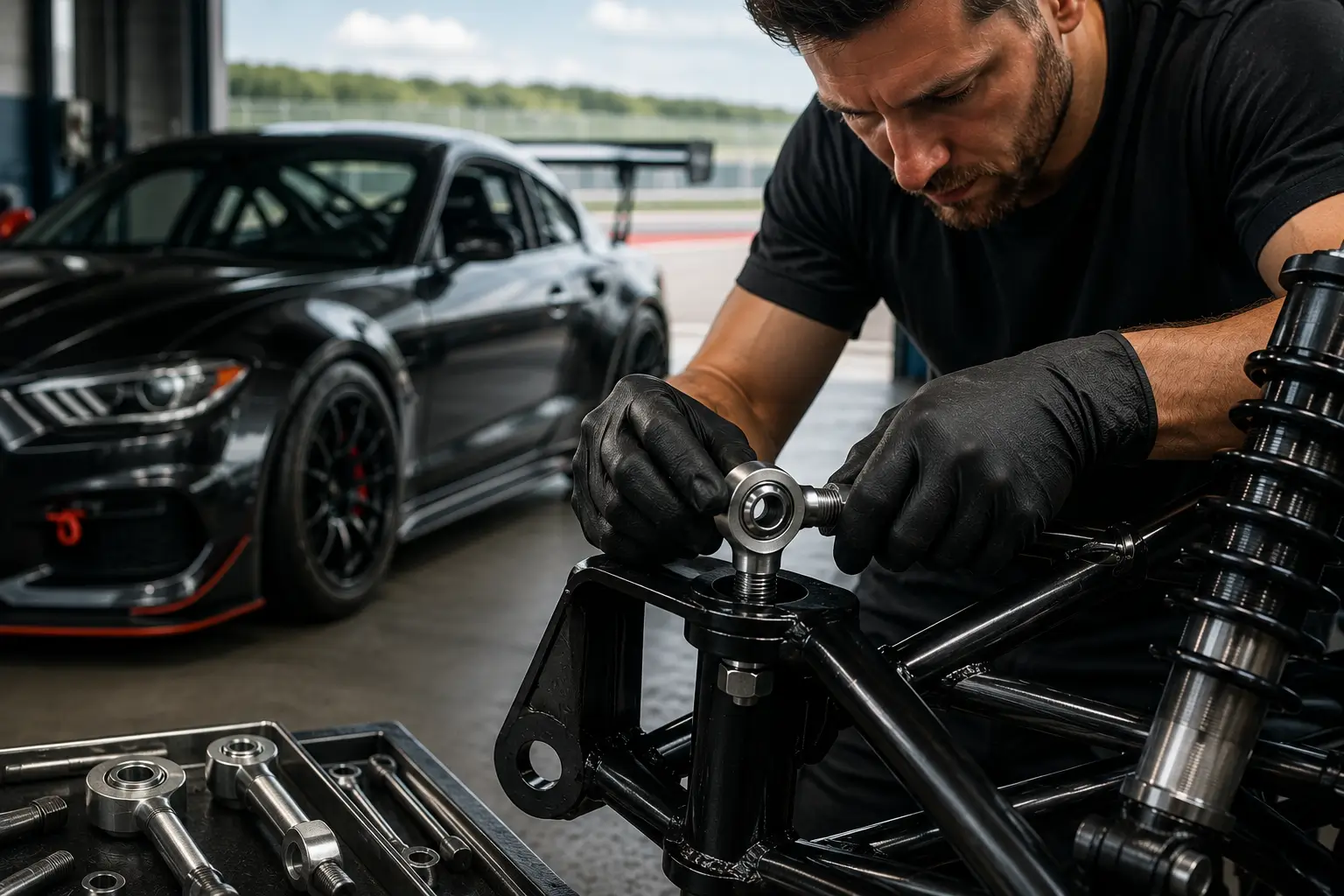
A rose joint works differently. Also known as a spherical bearing or rod end bearing, it uses a precision-machined ball and race arrangement that allows movement without the same level of flex found in a rubber bush.
That difference might sound small, but it has a significant effect on how the suspension behaves.
When cornering, braking or accelerating, a suspension system fitted with rubber bushes allows a certain amount of compliance. Components move slightly under load. This can alter suspension geometry and steering feel.
A rose joint removes much of that unwanted movement, allowing the suspension to operate closer to its intended geometry.
Why Motorsport Cars Use Rose Joints
There is a reason rose joints are found throughout motorsport.
Race cars, rally cars and track builds are designed around precision. Drivers want the suspension to react consistently from one corner to the next, without geometry changing as loads increase.
A rose joint has very little compliance, so suspension settings remain more consistent under hard driving.
This can improve:
Steering accuracy
Chassis response
Camber control
Suspension geometry consistency
Driver feedback
On a track car, these benefits are often easy to feel. The steering tends to feel sharper and the car reacts more directly to driver inputs.
This is one of the reasons rose joints are commonly used alongside performance suspension components such as top mounts and adjustable track rod ends, where precise adjustment and repeatability are important.
Rose Joints
Built around precision, reduced compliance and repeatable geometry under load. Best suited to track, race, rally and focused performance builds.
OEM Rubber Bushes
Built around comfort, refinement and everyday usability. Best suited to standard road cars and drivers who want less noise and vibration.
Where OEM Rubber Bushes Still Make Sense
Motorsport parts are not automatically the right choice for every vehicle.
A standard road car spends most of its life dealing with potholes, expansion joints, poor road surfaces and everyday traffic conditions. Rubber bushes help absorb those imperfections before they reach the cabin.
They also reduce NVH, which stands for noise, vibration and harshness.
For daily-driven cars, this comfort matters.
A factory suspension system is designed with a balance between handling, refinement and durability. Rubber bushes form an important part of that balance.
Drivers moving from OEM bushes to rose joints often notice an increase in vibration and road noise almost immediately.
That does not mean the upgrade was a mistake. It simply means there is a trade-off.
The Biggest Advantage Of Rose Joints
The main benefit is control.
When suspension components move exactly as intended, the car becomes more predictable. Alignment settings stay more consistent and steering inputs feel more direct.
This becomes increasingly important as grip levels rise.
A track car running sticky tyres, upgraded brakes and stiffer suspension generates significantly more load than a standard road car. Under those conditions, the flexibility built into rubber bushes can become a limitation.
Rose joints help remove that variable.
For builders focused on extracting the maximum performance from a chassis, that extra precision is often worth the compromise elsewhere.
The Downsides You Should Know About
Any honest discussion about rose joints needs to acknowledge their drawbacks.
The biggest one is refinement.
Because there is less compliance within the suspension, more vibration and road texture makes its way into the vehicle. The cabin can feel noisier and harsher, particularly on poor road surfaces.
Maintenance can also become more important.
While modern motorsport-spec rose joints are built for demanding environments, they are still precision components. Regular inspection is good practice, especially on vehicles that see track use, competition use or high mileage.
This is one reason many enthusiasts choose a mixed approach. Some areas of the suspension may use rose joints, while others retain bushes to preserve a degree of comfort.
Rose Joints Vs Polyurethane Bushes
For many enthusiasts, the decision is not always between rose joints and OEM rubber bushes. Polyurethane bushes often sit somewhere in the middle.
Polyurethane bushes are stiffer than standard rubber, which helps reduce unwanted suspension movement while still retaining some level of compliance. They are a popular upgrade for fast road cars because they can improve steering response and suspension control without introducing the same level of NVH associated with a fully rose-jointed setup.
That balance makes them a sensible option for drivers who want a sharper feel from the chassis but still spend most of their time on public roads.
Rose joints sit at the more focused end of the scale. Their purpose is to provide accuracy rather than comfort. Where a polyurethane bush still allows a degree of movement, a rose joint aims to keep suspension geometry as consistent as possible under load.
The right choice depends on what the car is expected to do.
When Are Rose Joints Worth the Upgrade?
The answer largely comes down to how the vehicle is used.
For a dedicated track car, race car or competition build, the benefits are often easy to justify. The more aggressively a car is driven, the more important suspension accuracy becomes. Small changes in geometry that might go unnoticed on the road can have a much greater effect on track.
Kit car builders also regularly choose rose joints because they offer greater control when developing and fine tuning suspension setups. Many lightweight chassis designs place a strong emphasis on adjustability, making spherical bearings a natural fit.
Road cars are a different conversation.
A vehicle that spends most of its life commuting, covering motorway miles or dealing with rough road surfaces may not benefit enough to justify the compromises. While some owners are happy to accept additional vibration and noise in exchange for sharper handling, others may find a less aggressive solution more suitable.
There is no universal answer. The best setup is always the one that matches the intended use of the vehicle.
Rose Joints Vs OEM Bushes FAQs
What is the difference between a rose joint and a rubber bush?
A rubber bush uses a flexible material to absorb movement, vibration and noise. A rose joint uses a spherical bearing that allows movement with significantly less compliance, helping maintain more consistent suspension geometry.
Are rose joints suitable for road use?
They can be used on road cars, but they are most commonly associated with performance and motorsport applications. Drivers should expect an increase in noise, vibration and harshness compared with a standard bush setup.
Do rose joints wear out faster than bushes?
Like any suspension component, lifespan depends on usage and operating conditions. Regular inspection is recommended, particularly on vehicles that see track time or competition use.
Why are rose joints used in motorsport?
Motorsport places a premium on precision. Rose joints help reduce unwanted suspension movement, allowing geometry settings to remain more consistent under braking, cornering and acceleration.
Do rose joints make noise?
They can transmit more vibration and road noise than rubber bushes because there is less material available to absorb those forces.
Choosing The Right Components For Your Suspension Setup
Suspension upgrades are rarely about a single component. The way a car behaves comes from how the entire system works together.
For builders looking to increase suspension accuracy and adjustability, our range of rose joints and rod ends offers options for a wide variety of performance and motorsport applications. Many projects also benefit from complementary upgrades such as adjustable track rod ends and performance top mounts, helping create a suspension package that can be properly tuned to suit the vehicle.
The right choice ultimately comes down to the intended use of the car. Understanding the strengths and compromises of each option makes it much easier to build a setup that delivers the feel, feedback and performance you’re looking for.
To discuss your requirements with our team, you can call us on 01744 895888, email us at [email protected], or fill in our online contact form.
Send us a Message
Table of contents
Recommended products
